

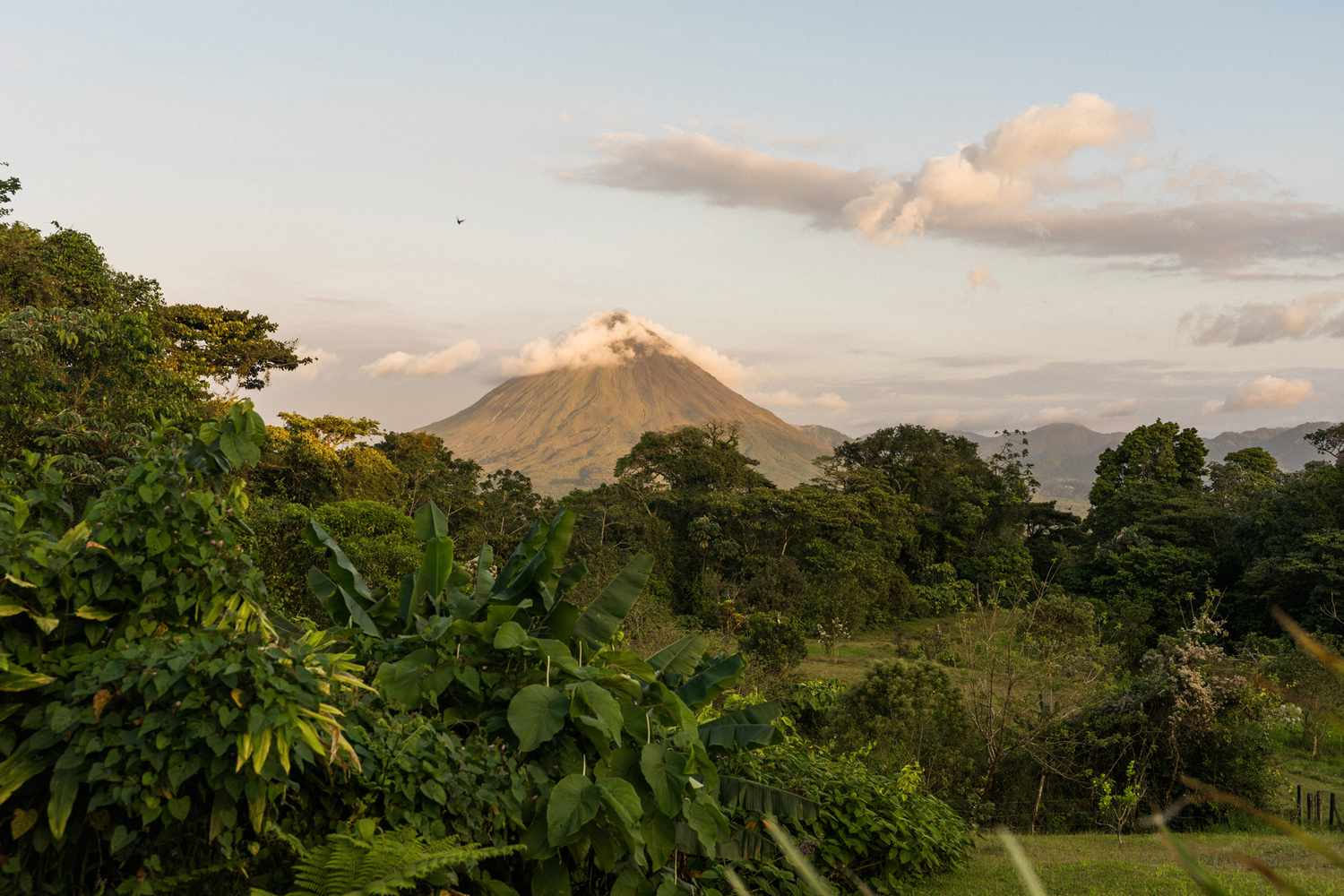
Does the smell of a fresh cup of steaming coffee make you feel all warm and fuzzy inside? Or do you love the crisp snap of a well-tempered chocolate bar? Then the tour I’m about to share is for you!
While it’s easy to find these treats at the store, you may be surprised at how much work goes into preparing them for consumption. It’s no wonder they can taste so good!
If you’re interested in learning about coffee, cocoa, and sugar cane, I highly recommend taking a tour with North Fields in La Fortuna, Costa Rica. This tour on a family-owned plantation will give you a behind-the-scenes look at the entire process for all three treats and even let you sample the goods at the end!
I particularly loved this tour because it combined education with some fantastic hands-on interaction–not to mention I got to eat all the chocolate I wanted. (Let’s gooo!)
Sound like your type of day trip? Here are the details…
In this post:
Get even more info with our YouTube video!
Coffee, Chocolate, and Sugar Cane Tour with North Fields: Coffee & Cocoa Education
Part 1: The History of Coffee
Your tour starts in the middle of the coffee fields, on a set of covered benches. Your guide will share some fascinating details on how coffee spread across the world, who the major growers are, and the differences between coffee types. (Always choose Arabica!)
He’ll also briefly explain the growing cycle of coffee plants, so you understand how much time has to be invested in producing good fruit.
Fun Fact: A coffee plant takes 3 to 4 years to bear its first fruit and will have the best fruit between 7 and 20.
Part 2: Types of Coffee Plants
Next, you’ll leave the awning and take a brief walk through the plantation. Your guide will point out different types of coffee plants and show examples of fruit in various stages.
Fun Fact: Coffee beans can be red, green, or yellow!
Part 3: Coffee Drying Processes
Your next stop is a small shed, where you’ll learn about the different ways to dry coffee beans.
The process starts by hulling the “parchment” layer of the coffee fruit to reveal the bean. In the old days, workers did this with a mortar and pestle, which your guide will demonstrate. Once that skin is off, high-quality coffee companies check each bean to make sure it looks nice before adding it to a batch to dry. In Costa Rica, the “ugly” beans are kept locally, while the nicest ones are exported.
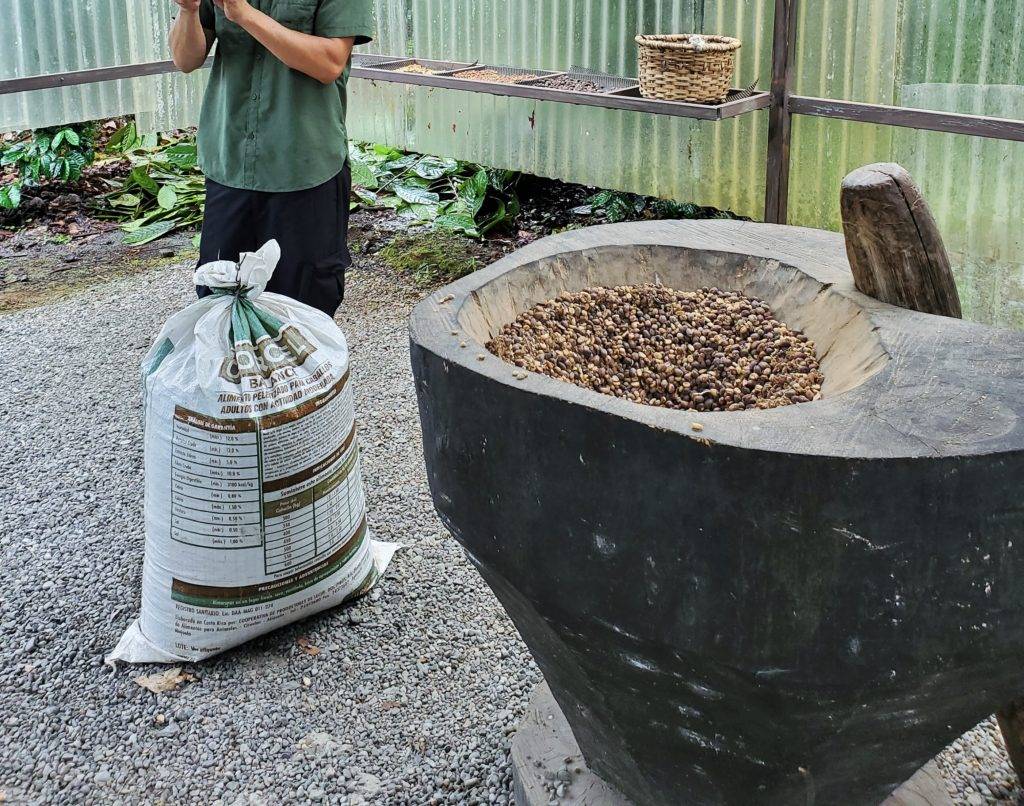
After the beans are hulled, they can be dried/fermented. The three processes are called washed, dry, or honey drying. The different methods result in different flavors, and each takes a different amount of time.
Part 4: The History of Chocolate
Did you know that cacao beans were once a form of currency? The Aztecs and Mayans practically worshipped cacao, calling it the “Food of the Gods.” I’m sure some of you can relate!
This part of the tour gives a brief history of chocolate, its role in ancient society, and a little about the growing process.
Part 5: Cacao Pods Up Close
After you leave the chocolate “hut,” you’ll once again walk through the plantation, this time focusing on the cacao plants. Your guide will show you pods in different stages of growth and explain some of the common problems that plantations face, such as bugs and birds.
Fun Fact: Cacao pods can be red, purple, or green, but they turn yellow or red when ripe.
You’ll probably also see some pineapples growing in tires along the pathway. (They’re so cute!) Did you know that each pineapple plant only makes one fruit?
Part 6: Cacao Fermentation
Next up is the cacao fermentation process. This was probably the most surprising part of the tour for me!
When you open up a cacao pod, you’ll see a floppy, whitish-pink bundle of seeds connected by pulp. It looks similar to a bundle of garlic. But if you break off one of these seeds and suck on it, it has a fruity flavor, similar to a melon!
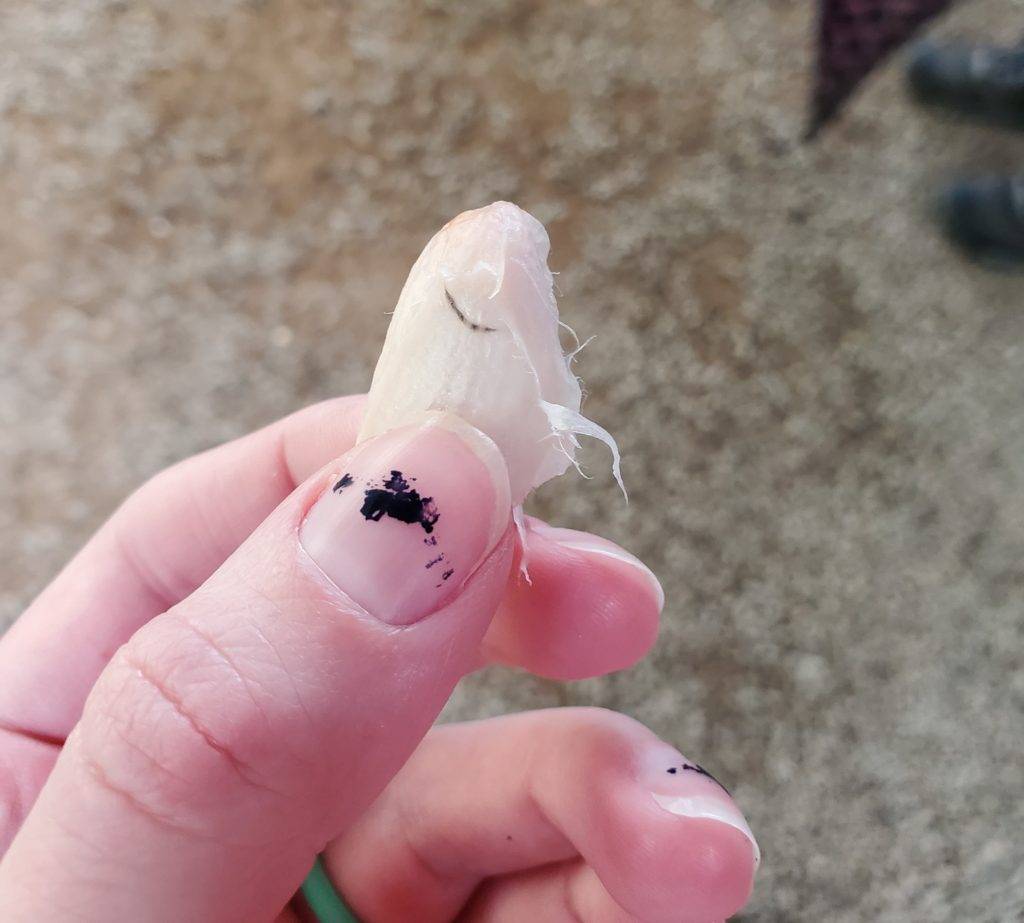
The seeds and pulp undergo a 3-stage fermentation process that takes about eight days. After that, they’re set out to dry, which takes about a week.
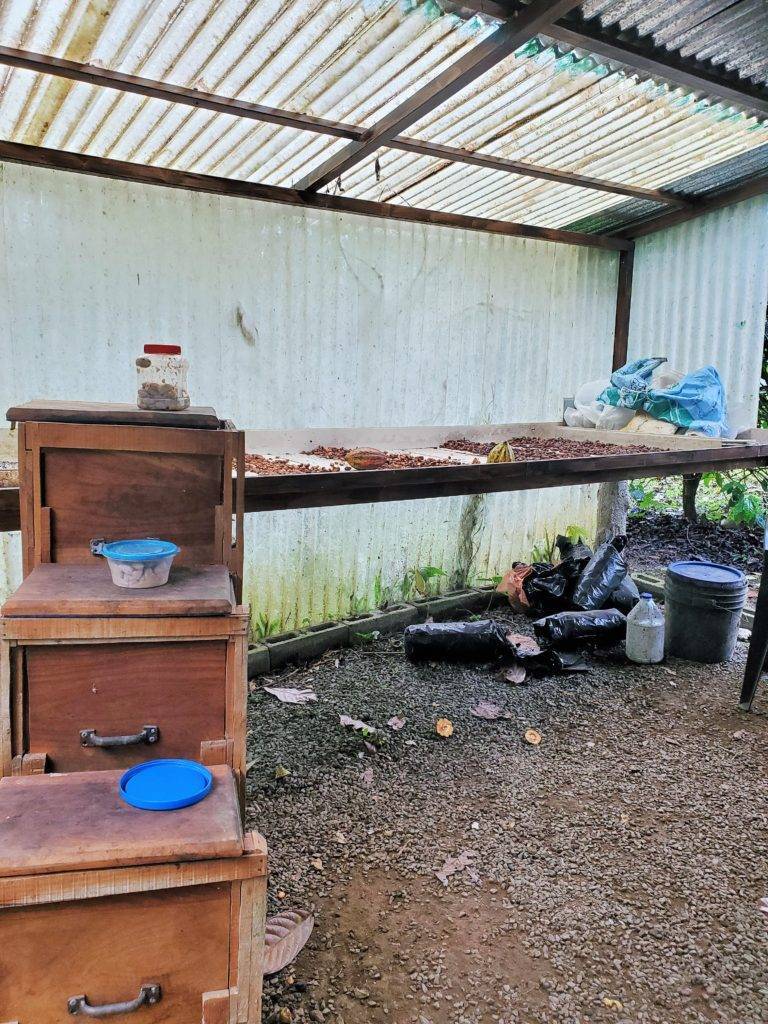
Our guide told us that due to the area’s humidity, they send their cacao seeds elsewhere to dry and then get them shipped back for processing. When they get them back, they’re the brown color we typically associate with cocoa!
Coffee, Chocolate, and Sugar Cane Tour with North Fields: Hands-On Learning & Tastings
The next part of the tour was my favorite! After learning all about these treats’ growing and fermenting processes, it’s time to prepare them for eating!
Part 1: Creating Chocolate
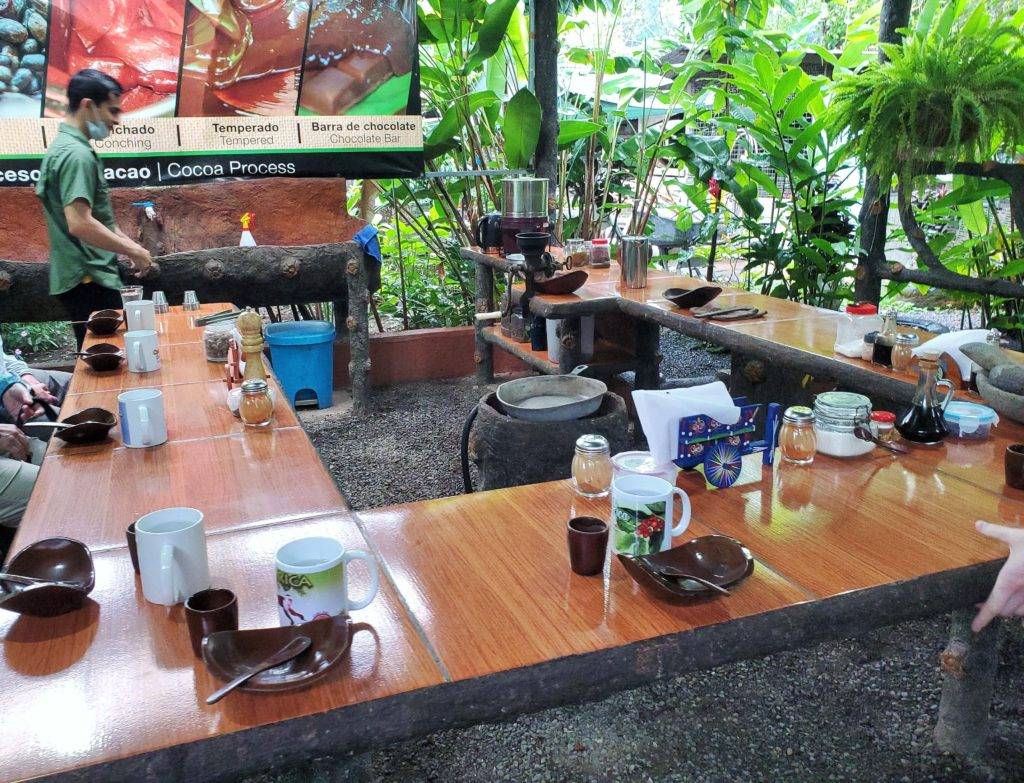
Your guide will bring you back from the fields and settle your group at a large, U-shaped table. In the center space, you’ll see a variety of old-fashioned gadgets that people once used to prepare chocolate by hand. And now, you get to see them in action!
Your guide will begin roasting some dried cacao beans over a small fire. When the beans are ready, they’ll start popping and turn a nice, dark brown.
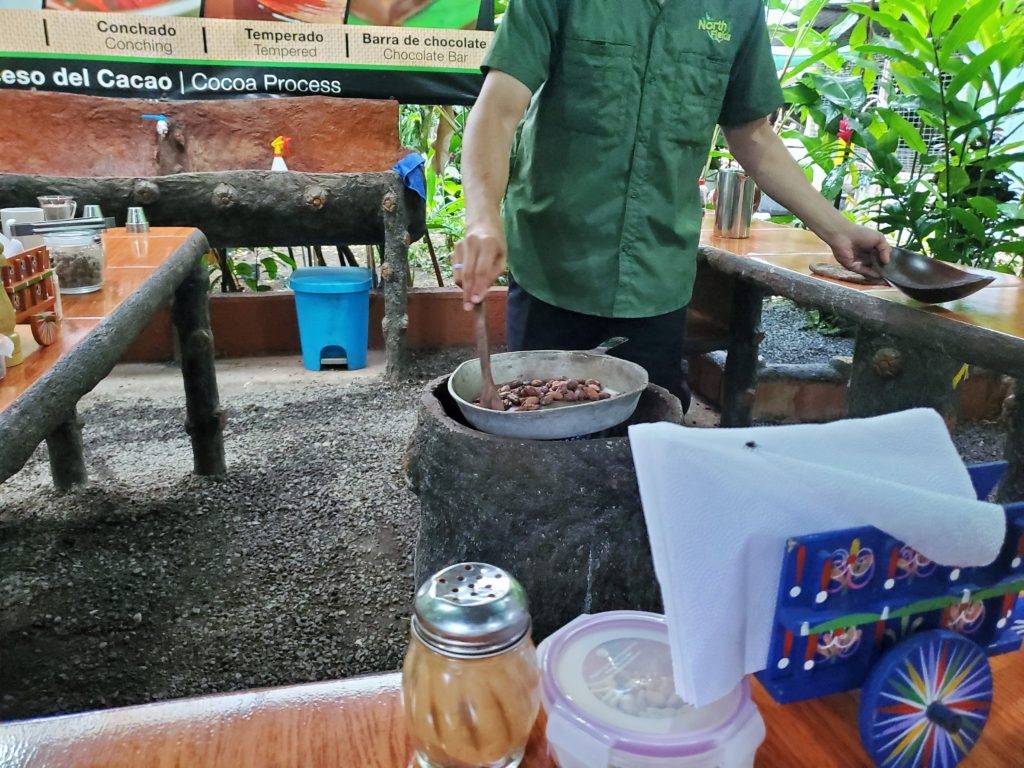
Fun facts: These roasted beans can be rolled in sugar and eaten as-is for a traditional treat! This roasting step is also when they transform from “cacao” into “cocoa.”
At this point, any remaining skin on the cocoa beans is removed. In Costa Rica, they’ll often save the skins and use them to make chocolate tea! Your guide will make a fresh pot and give each person a little cup to try.
The roasted beans are then broken up into “nibs,” which are a very healthy treat but super bitter.
After this, it’s time for “conching.” The beans/nibs are put into a grinder, which turns the beans into a thick paste. Then, the paste and sugar go into a special blender to process for several hours.
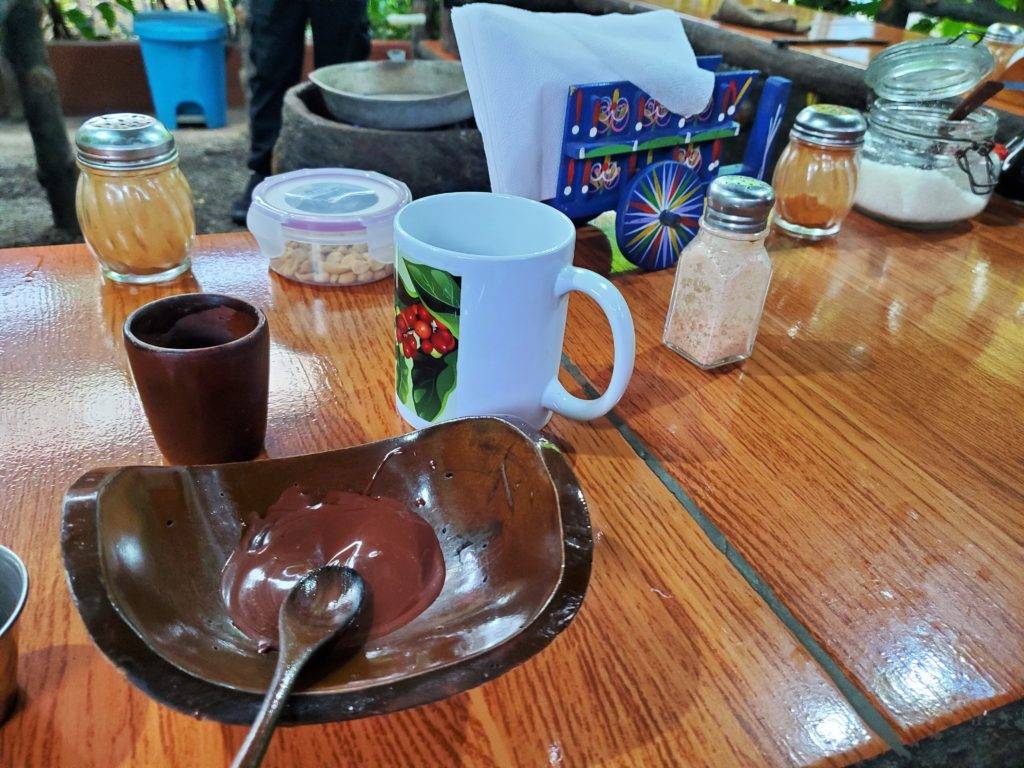
Thankfully, your group gets to skip ahead to see the result! The next thing you get to do is create your own blend of chocolate! Your guide will give each person a scoop of warm, tempered chocolate, and you can use the different ingredients around the table to create your own recipe! Choose from nuts, sugar, vanilla, cayenne pepper, sea salt, and more!
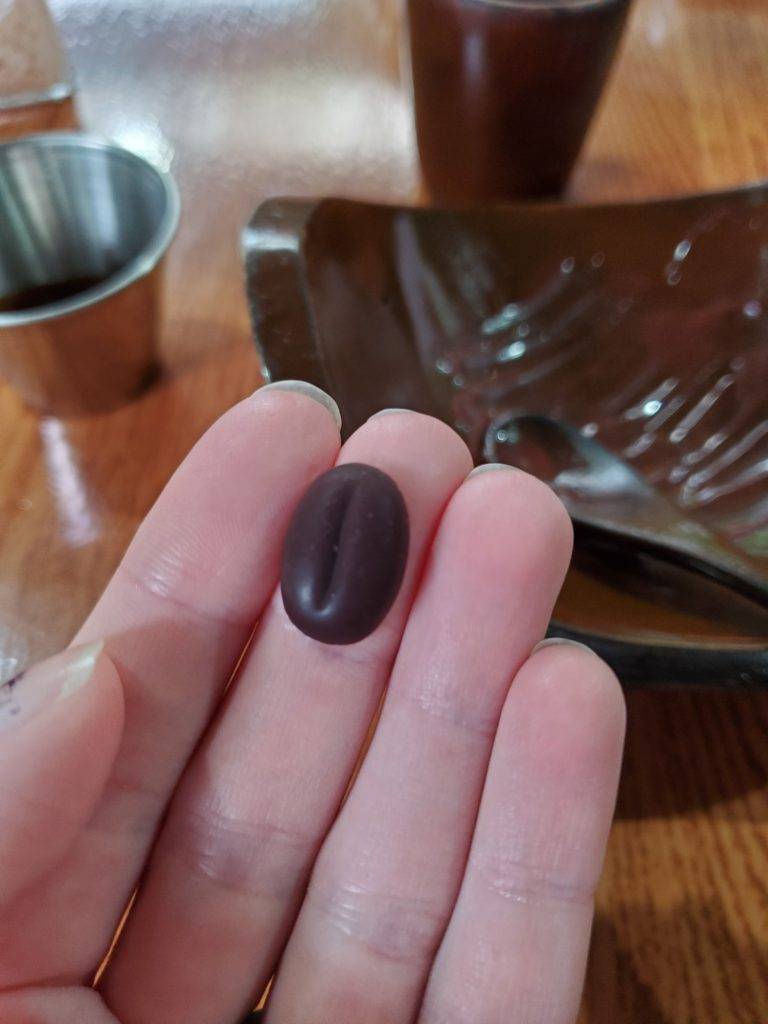
Finally, you’ll see how chocolate can be molded and cooled into bars and different shapes. You’ll also get to try a few pieces of North Fields’ own chocolate blends, shaped into tiny chocolate beans.
Part 2: Coffee Roasting
By the time you finish eating your chocolate, you’ll probably be able to smell the incredible aroma of roasting coffee. Just a few steps away, another guide will be working away at an old-fashioned coffee roaster, turning a large cylinder over a fire.
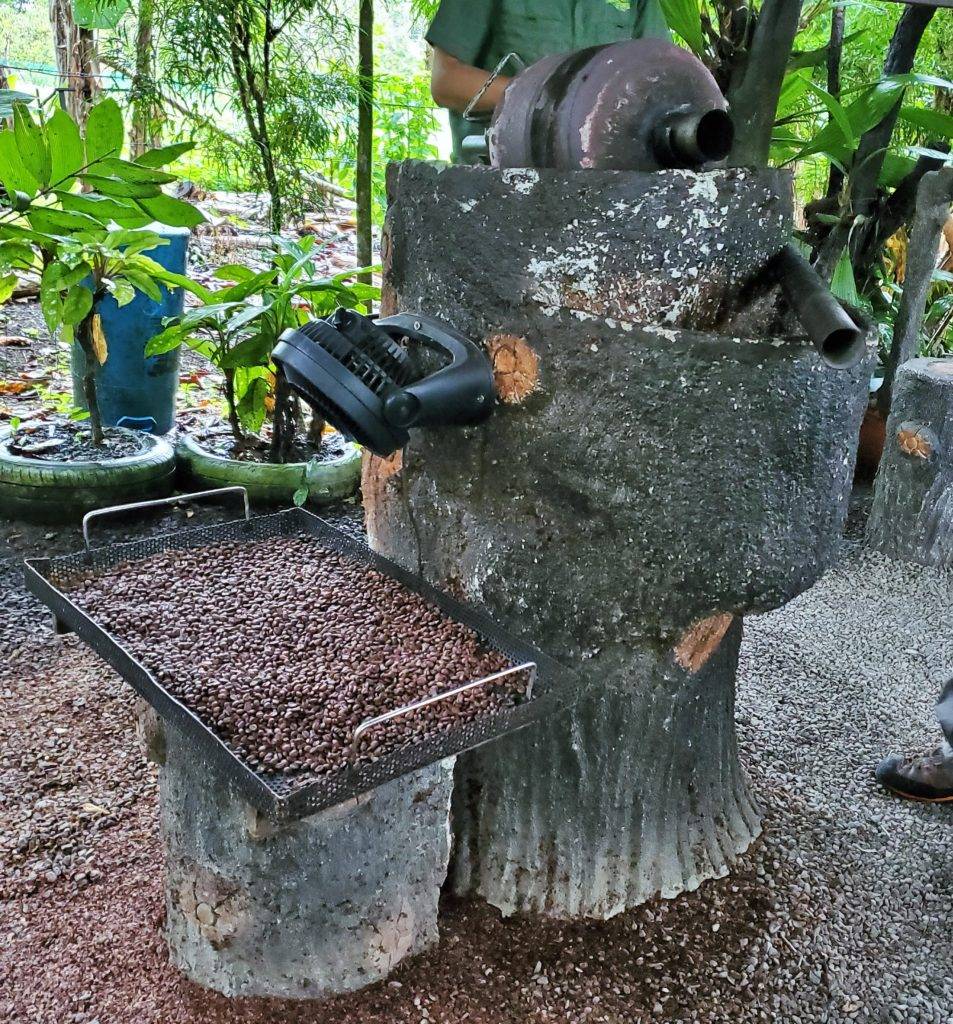
As he roasts the beans, your guide will explain and demonstrate the difference between different roasting levels and how it affects the flavor and caffeine content. You’ll also learn how “decaffeinated” coffee works.
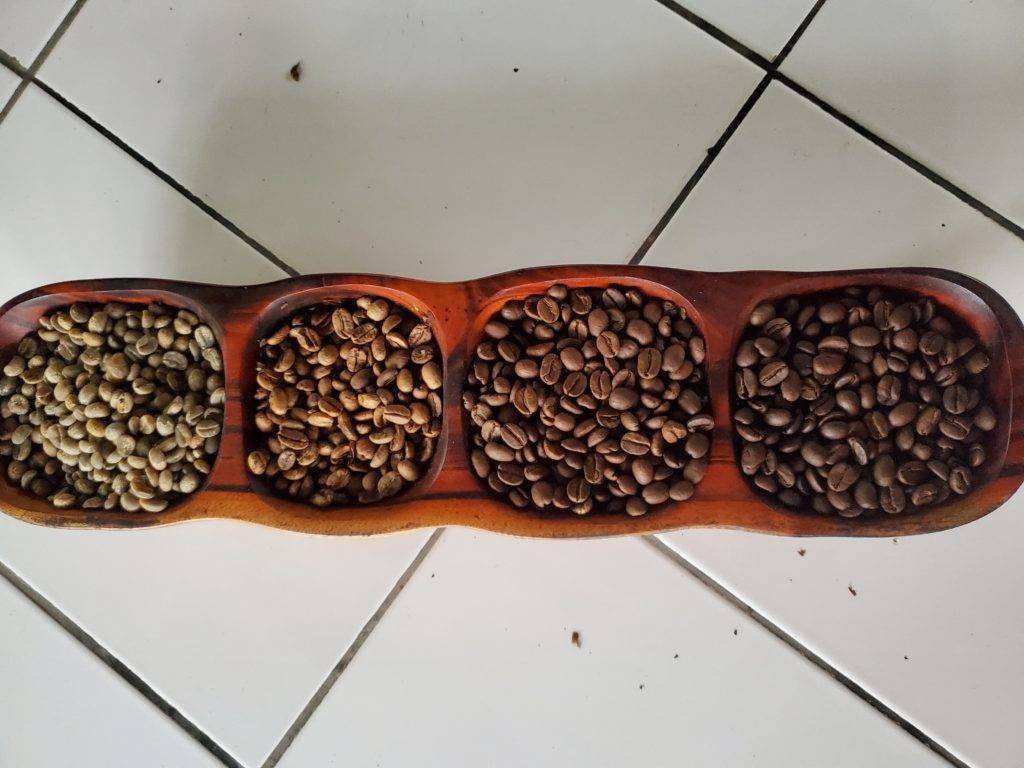
Fun fact: If your coffee beans are dark and glossy, they’re burnt! You want a medium-brown shade of beans with a matte texture for a proper dark roast.
Part 3: Sugar Cane Pressing & Tasting
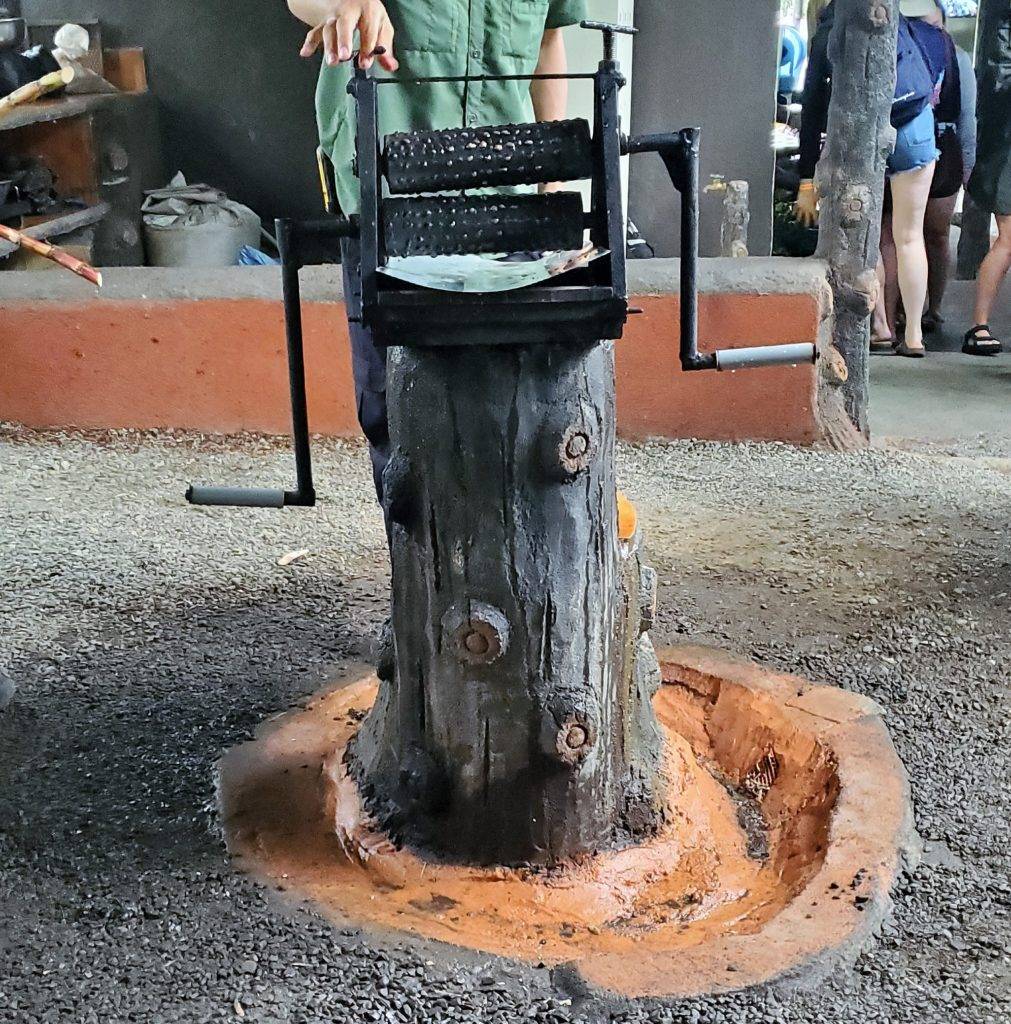
During the first part of the tour, you’ll likely see some sugar cane plants. While the tour doesn’t dive into the history of sugar cane, you’ll still get to enjoy some during this part.
Your group will take turns crushing a shaft of sugar cane with an old, hand-turned press to remove the juices. Each pass gets more challenging, resulting in a shattered, pulpy stalk and lots of sugar water.
Each person will get to try a small cup of sugar water, which tastes rather green in my opinion.
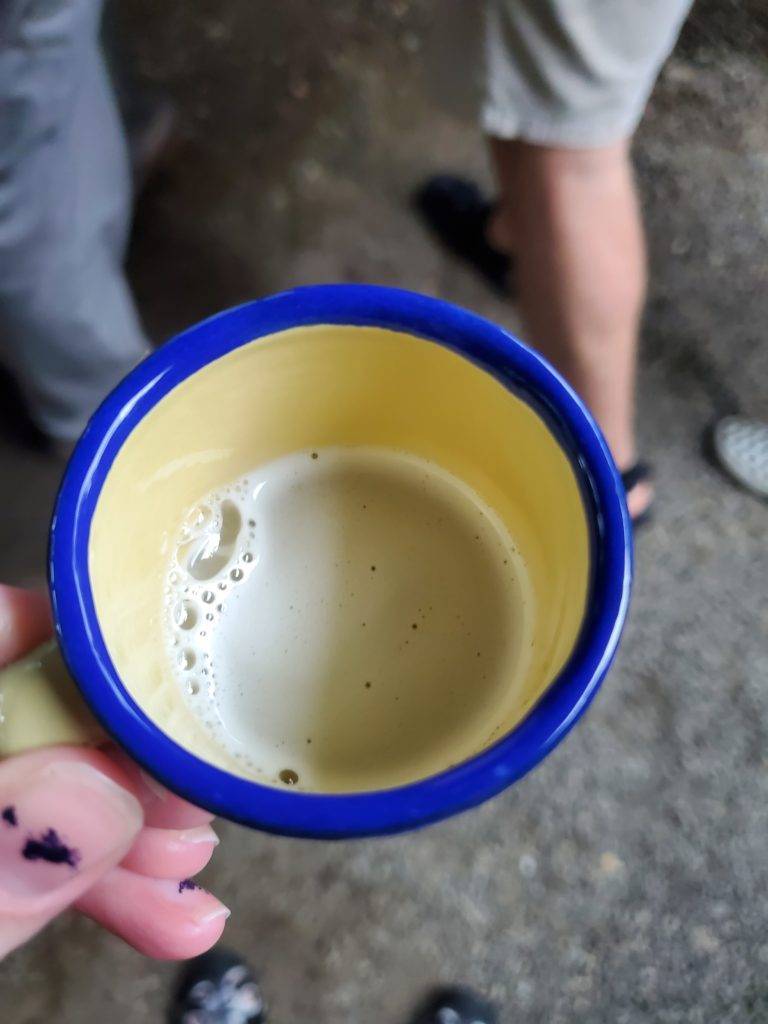
When sugar cane juices are boiled down, they create molasses, which is the next thing you’ll get to try.
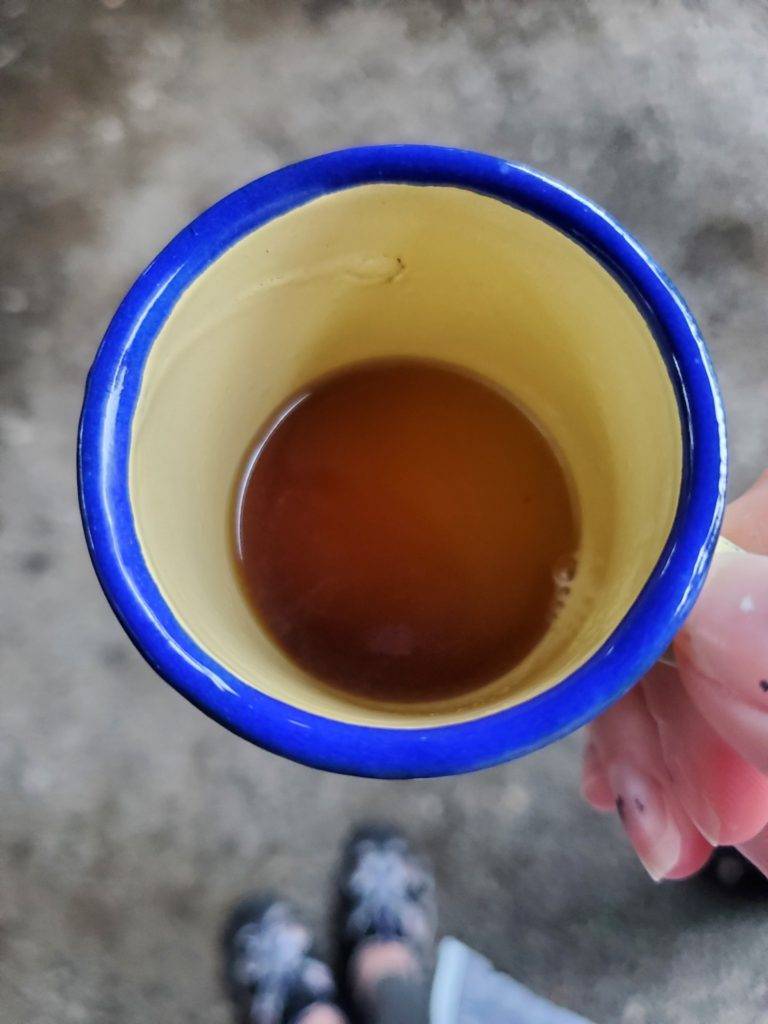
The final use for sugar cane water may be surprising: rum! I had no idea! We didn’t try it, but the tour seemed to provide a pretty strong batch, based on the other guests’ reactions.
Part 4: Coffee Tasting
You’ll probably be ready for a pick-me-up cup of coffee by this point. You’re lucky because you’ll get to try a fresh pot in just a few minutes.
At a long bar, your guide will show you several different types of coffee makers used around the world. They have everything from a Chemex to French Press. But you’ll be trying coffee brewed in the traditional Costa Rican way: the chorreador!
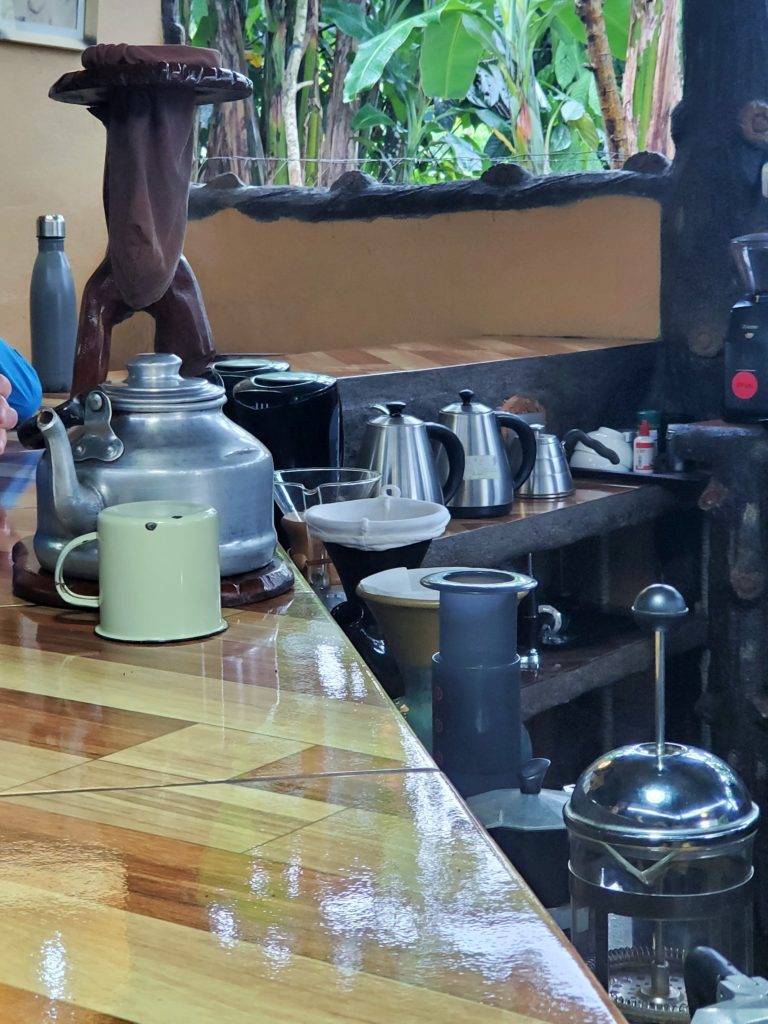
According to our guide, this is the coffee maker you will see in every traditional Costa Rican home. Basically, it’s a wooden stand with a “sock” hanging down from the top. You place your grounds in the sock, pour hot water in a little bit at a time, and wait for the coffee to drip into your pot or cup.
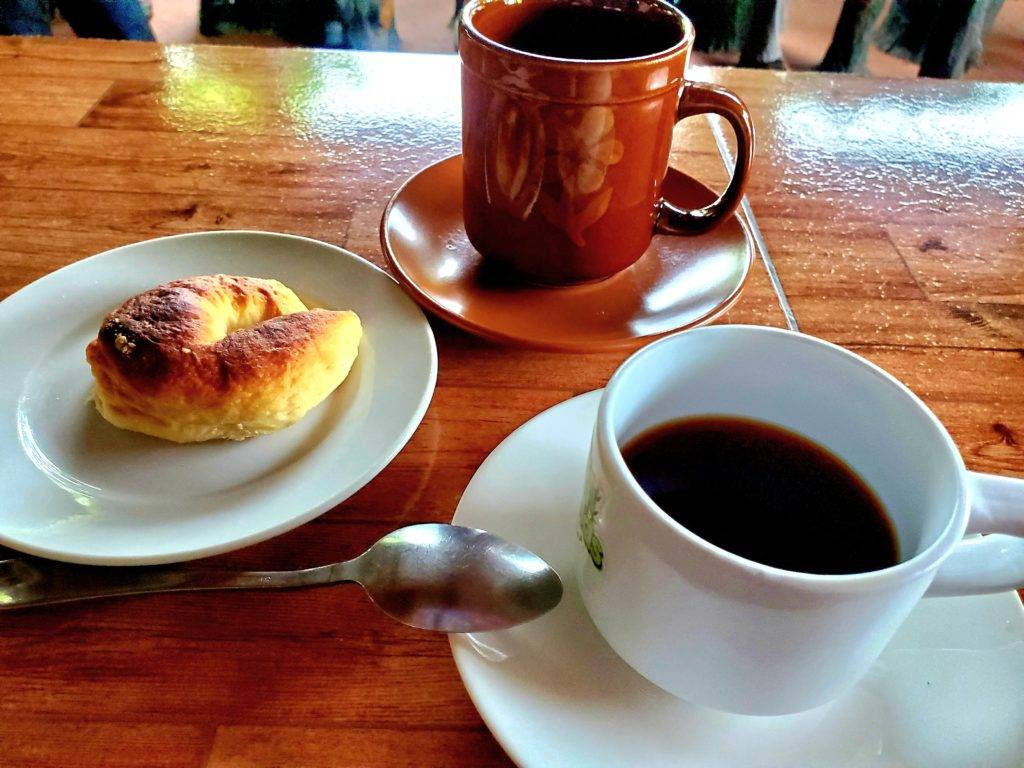
Your guide will grind some fresh light and dark roast beans for your group, then get a pot of each going through a set of chorreadors. Once each pot is ready, your group will head over to the picnic tables at the entrance for a final treat: fresh cups of coffee and arepas from the family’s Abuela!
Closing Thoughts
If you’re interested in booking a tour while you’re in La Fortuna, you can do so here.
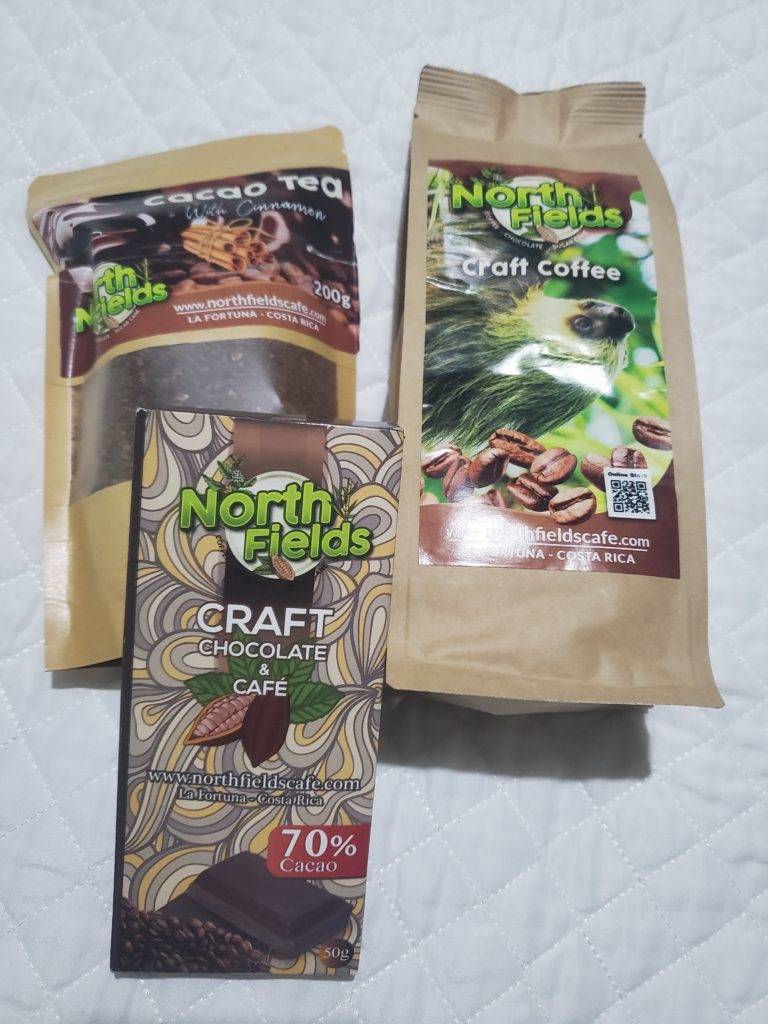
I also highly recommend a stop by the North Fields shop! They have all sorts of cute local creations, as well as a selection of their own coffee, chocolate, and chocolate tea. We got some of each, as well as our very own chorreador to take home! It has a sloth on it 🙂
If you enjoy your tour, be sure to tip your guide, as well. It’s hard work using all those old-fashioned gadgets!
Do you have any questions or comments? Drop them below, and I’ll be happy to get back to you!
Before you go, please do these three things:
- Check out my YouTube video to see this awesome tour in action.
- Save and share this post so others can learn about this amazing family-run plantation.
- Subscribe to my blog for weekly post notifications (no spam!).
And if you’re planning a trip to Costa Rica, I also recommend that you check out some of my recent posts from our trip in March 2022. We had a blast, and my thorough guides will make sure that you do, too!
The Pura Vida Series:
- Everything you Need to Know About the Mistico Hanging Bridges
- Into the Rainforest: A Trek Through Sloth’s Territory
- An Exciting Zip Line & Rappel Tour in La Fortuna
- Why I Didn’t Want to Leave Montana de Fuego Hotel
- How to Make Your Trip to Costa Rica a Success: A Packing Guide
Thanks so much for checking out this tour! I hope you’ll be back next week to learn more about Costa Rica and the incredible adventures there. Happy travels!